
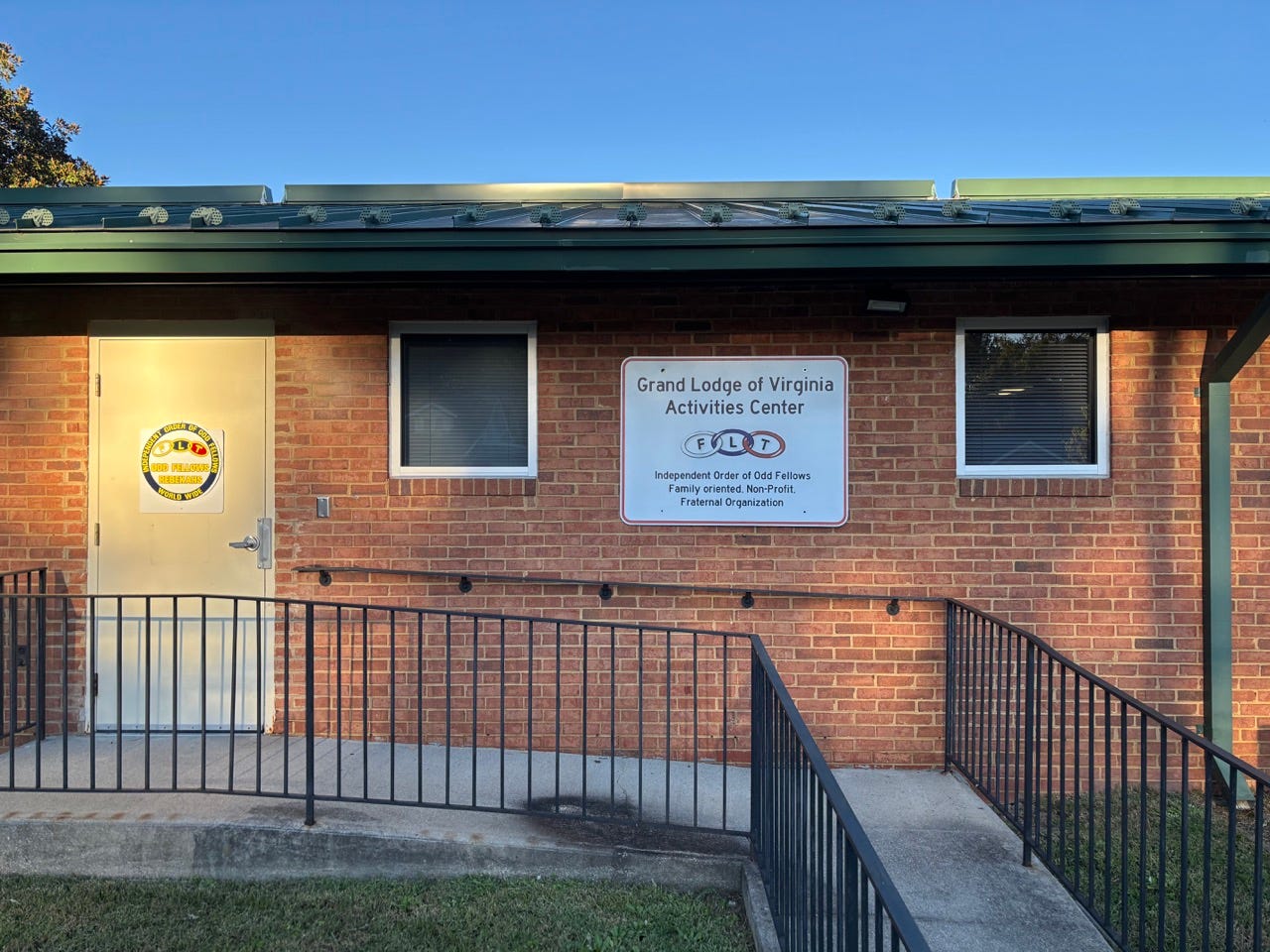
Tucked behind The Village Grill in Chester, Virginia, there’s a door that opens only for the initiated.
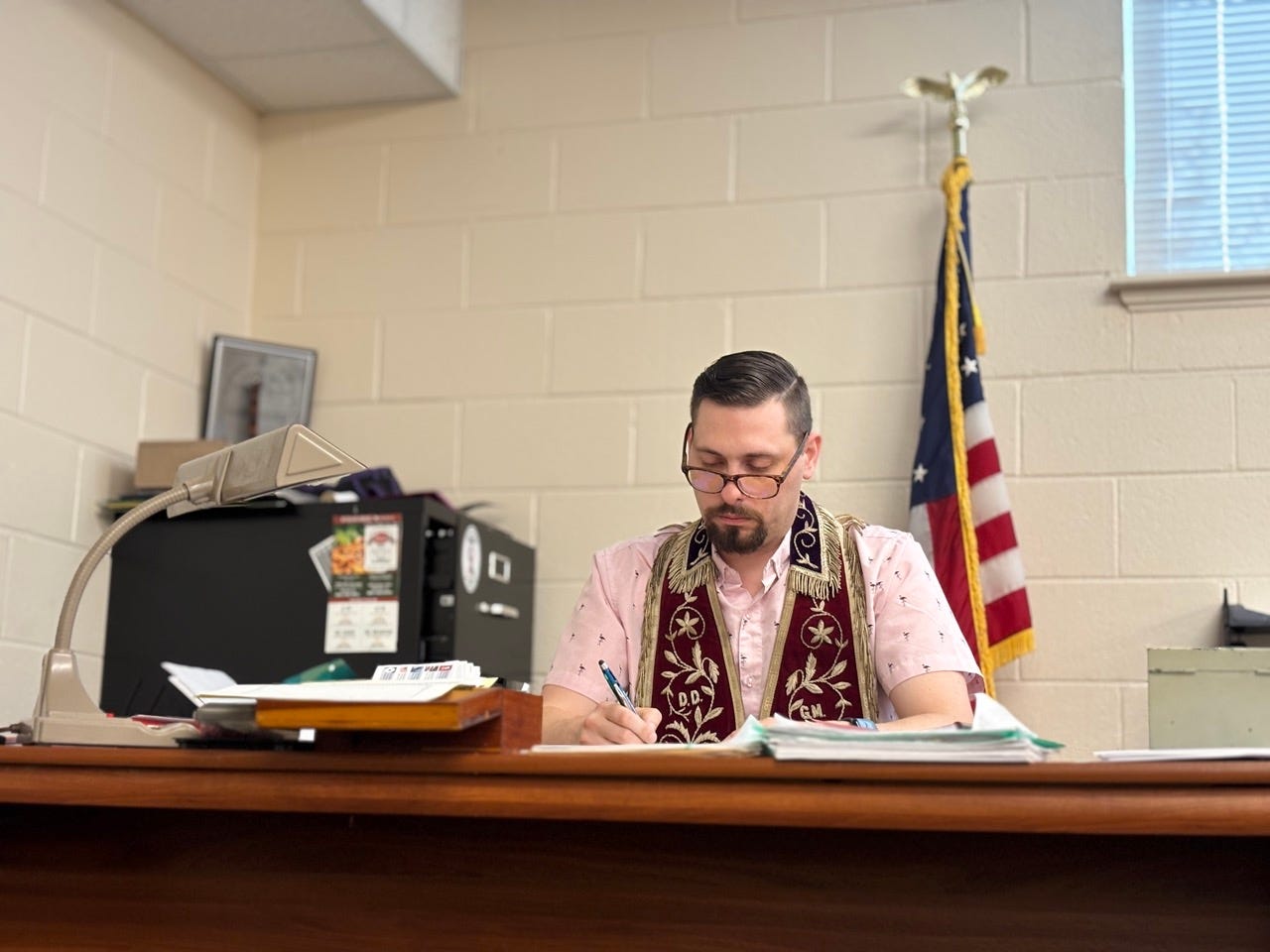
Twice a month in an unassuming brick building, men and women gather, dress in ceremonial regalia, and address each other as “Brother” and “Sister.” They call their leader the “Noble Grand.” The rituals are centuries old, the symbols cryptic, and the membership exclusive. But there’s no conspiracy—at least not a nefarious one. These are the members of Lodge 281 of the Virginia I.O.O.F.: The Independent Order of Odd Fellows. They’re realtors and hardware store workers. They’re neighbors, gathering to make their community a better place.
Becoming an Odd Fellow
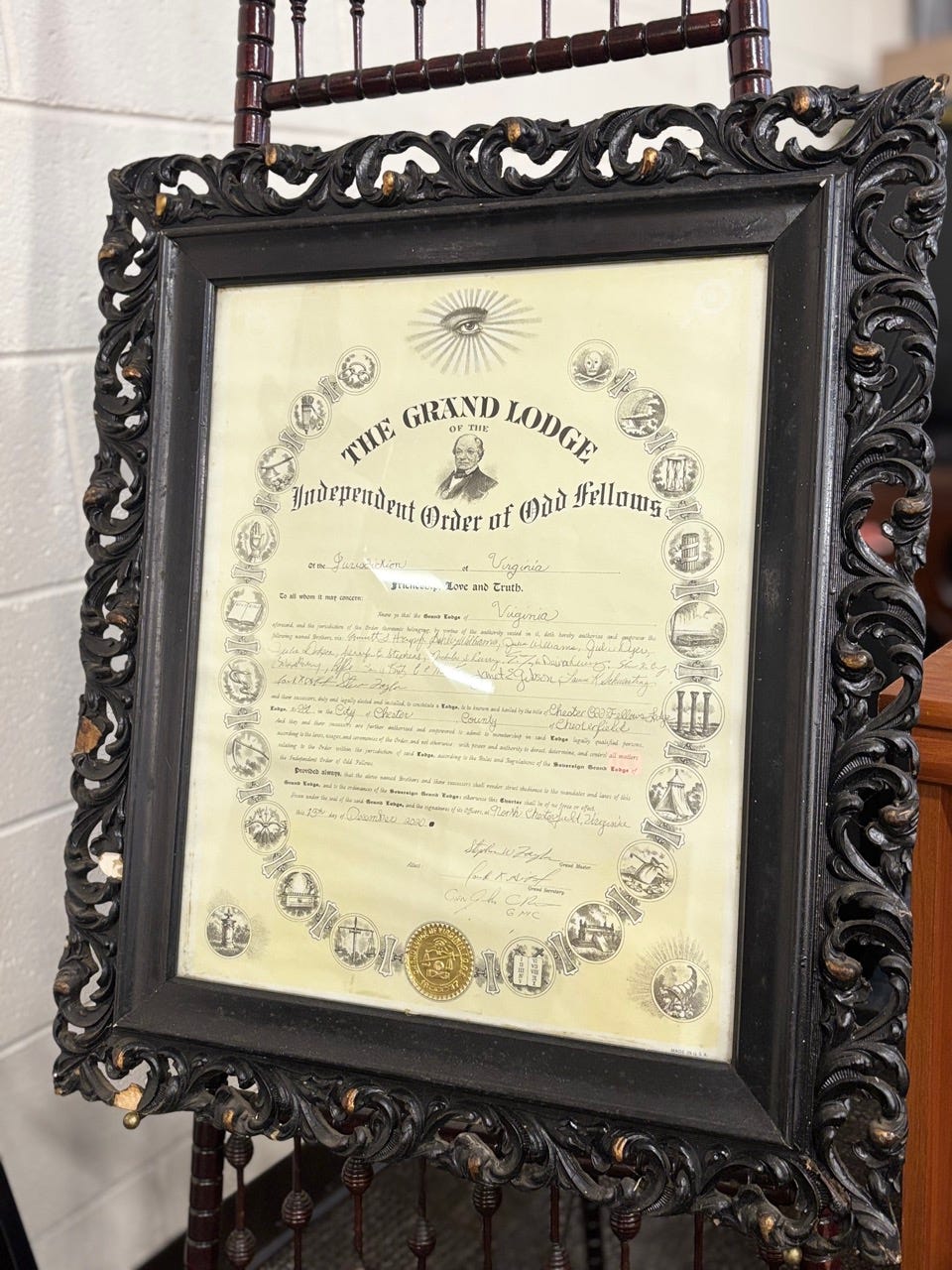
Virginia has fewer than 30 Odd Fellows lodges today, remnants of a fraternal tradition that once boasted millions of members nationwide. But Chester’s lodge isn’t a holdover from a distant past—it’s a revival. Lodge 281 was reborn in 2020 by a Chester local searching for what modern life increasingly lacks: community, belonging, and meaning.
In 2019, Nick Curry looked high and low for a group to join. Anything that would give him that sense of community. None fit. The dues were too high; they drank too much; they were too clique-y; their missions too specific. How hard could it be to find the right group of like-minded people? Quite hard, apparently. So he decided to start his own. “[I just] thought ‘I’ve got to do something,’ because I lived and breathed that work,” Curry says.
He wanted existing support and tradition, so he researched national organizations without local chapters. Browsing turned up familiar names and some he’d never encountered. The Odd Fellows caught his eye.
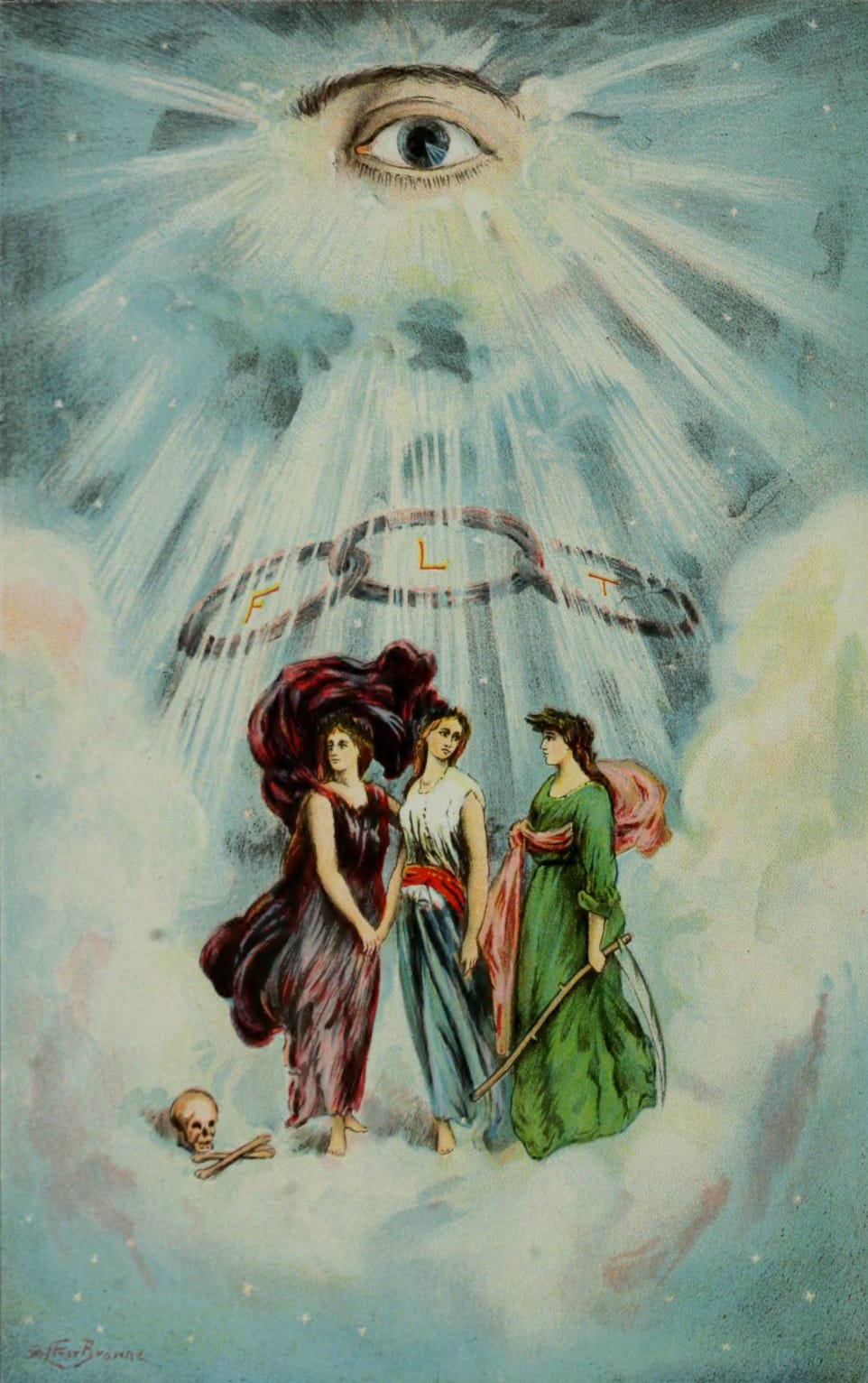
The unique name and the imagery drew him in: three-linked chains and all-seeing eyes, people dressed in intricate collars, illustrations dating back hundreds of years. Three words repeated again and again: Friendship, Love, and Truth. The Odd Fellows had the history and aesthetic of the Freemasons, which Curry liked, but seemed more financially accessible. “My turn-off from the Masonic lodge at the time was the expensive dues. I was a broke bloke,” he says.
Online sleuthing revealed active Odd Fellows lodges in Charlottesville and Newport News. Nothing in the Richmond area, though. “I grew up in Enon, so I’ve always been in [and around] Chester. This is where my heart is, my hometown,” Curry says. The Richmond area was a prime spot, waiting for a lodge of its own.
Getting in touch with Virginia’s Grand Lodge and starting the process proved harder than Curry expected. Anyone who’s read Robert Putnam’s Bowling Alone knows civic group membership has collapsed over the past half century. The Odd Fellows have been among the hardest hit. Forming a new lodge was a task almost unheard of. But after meeting Curry, the Grand Lodge threw its full support behind him.
They outlined a straightforward process: Curry would gather fifteen interested locals, achieve the three “degrees” of Odd Fellowship, then revive Chester lodge 281—which had ceased operations in the 1940s—as charter members. The plan came together in January 2020. You can imagine what happened next. COVID hit. Gatherings stopped. “It was like the day the world ended—March 14th was our last in-person meeting.”
The “Odd Jobs” Guild
The Independent Order of Odd Fellows arrived in America in 1819, when Thomas Wildey founded the first lodge in Baltimore (other lodges existed in Great Britain). The origin of the name is disputed. Some say it referred to the eclectic mix of tradesmen who joined—unlike guilds organized by profession, such as the “free masons”—others claim helping strangers was simply “odd” in an era before social safety nets. Whatever the origin, the mission was clear: visit the sick, relieve the distressed, bury the dead, educate the orphaned.
Odd Fellowship began as a men’s organization but added a women’s auxiliary in the mid-19th century. Today it’s fully co-ed. The requirements are minimal: be sixteen or older (in most jurisdictions) and profess belief in a “supreme being,” (the specifics of which are left to the individual).
The Odd Fellows’ heyday ran from after the Civil War through the Great Depression—what’s retroactively called the “golden age of Fraternalism.” Many fraternal orders from the period have faded entirely. Benefit and mutual aid societies became largely irrelevant after the New Deal, but organizations emphasizing camaraderie and self-improvement survived. The Odd Fellows held on. Though membership has declined dramatically since mid-century, “Friendship, Love, and Truth” never completely went out of style.
Today and Tomorrow
I met with Curry about a year ago, then again this past fall. He gave me a tour of the building behind the Village Grill and talked about the lodge’s past and future.
He’d placed an ad in the Chester Village News—a now defunct local paper—in January 2020 after initial discussions with the Grand Lodge. On January 15th they held their first meeting. As potential members gathered and chatted, someone realized the date was Thomas Wildey’s birthday. Curry took it as a sign.
He hasn’t looked back. He found co-conspirators willing to put in the work. Earnie Taylor, founder of a local homeless charity, became his right-hand man. Later-addition indispensable members include Diann Dickenson (another charity founder) and Beth Kcraget Robbins. “I can’t name everyone,” Curry says, “but every member has been essential to making the group into what it is today.”
COVID threw a curveball no one expected. In less dedicated hands, the revival might have fallen through. But Curry and Lodge 281 persevered, and in the years since, they’ve done remarkable work.
They help anyone in need. Curry remembers when “somebody lost their job and didn’t have money for food... we collected a lot of food and drove it to Hopewell at an ungodly hour.” The lodge participates in the annual “Walk out of Darkness” for mental health awareness; they adopted and maintain a formerly abandoned cemetery; they partner with Liberation Veterans Services to provide fresh meals to homeless vets. And most famously, they run an annual sausage meat fundraiser. Their most recent “Odd Sausage” sale raised $1,109, which was donated to the Association for Suicide Prevention. They also operate a small food pantry.
In early 2024, the Virginia Grand Lodge purchased their current building—a former Chesterfield County library. After three years of meeting wherever they could find space, they finally had a home.
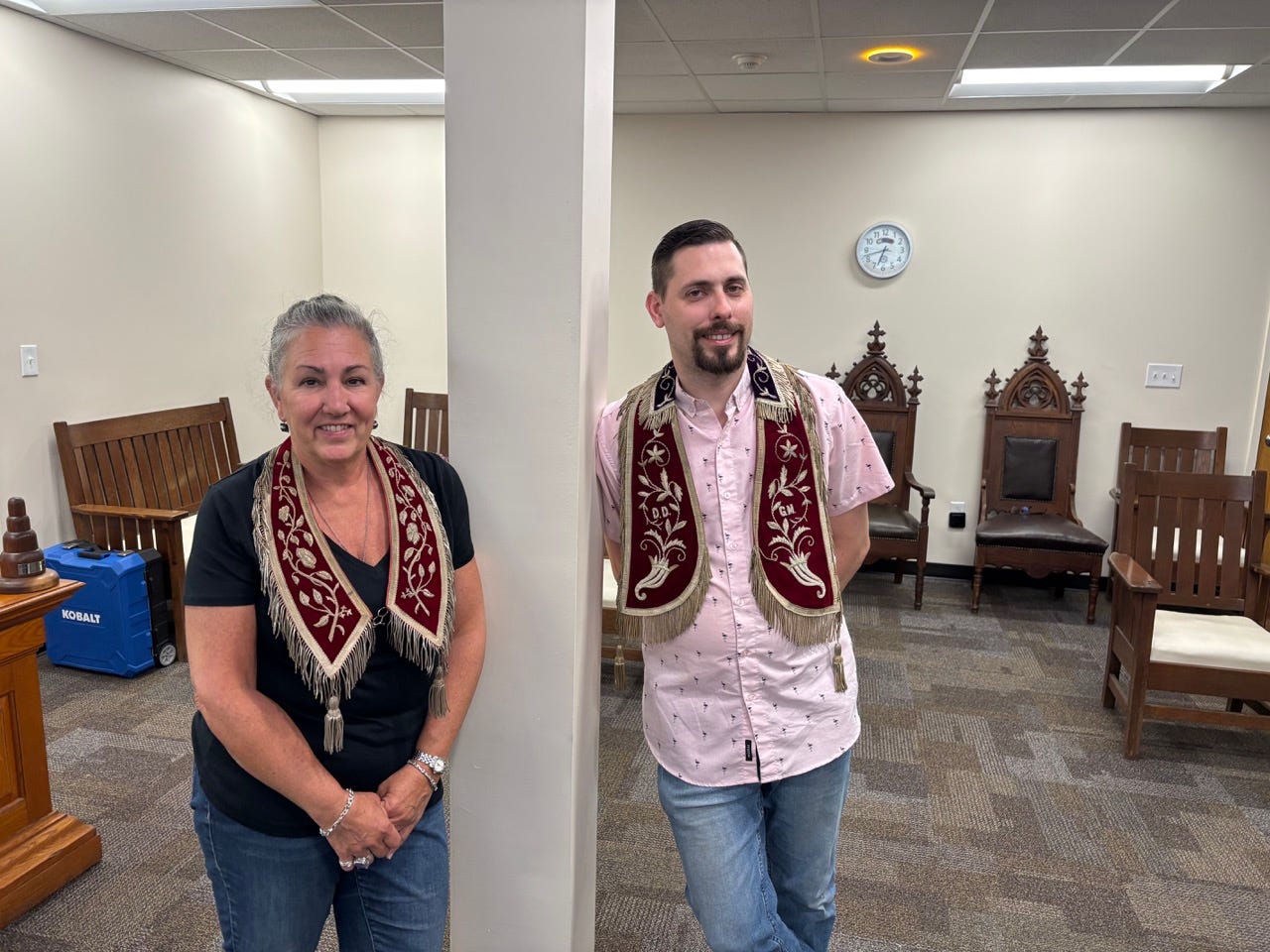
Before I left, I asked what’s next. Curry and Kcraget Robbins showed me a framed photograph recently gifted by a local resident: spiffy-looking Odd Fellows standing on the Virginia capitol steps. “[In the early 20th century], the General Assembly passed a perpetual calendar item for Odd Fellows Week in Virginia,” Curry explains. “We only rediscovered it a year or two ago, and now we’re trying to bring it back.” Running April 26th through May 2nd, the week highlights the organization’s contributions across the state.
I shook Curry’s hand and left him to his work. As a Virginian, I’m proud knowing groups like Lodge 281 are out there doing the hard work of keeping communities strong. A week of recognition from Richmond politicians is well-deserved.
If you’re interested in learning more or joining the Chester Odd Fellows, reach out at chester281secretary@gmail.com or visit their website.
GuildeHall Press is dedicated to the people and places keeping civil society alive in Virginia. If you know of a community organization or individual deserving of a profile, let the author know at bquintin@guildehall.com.